


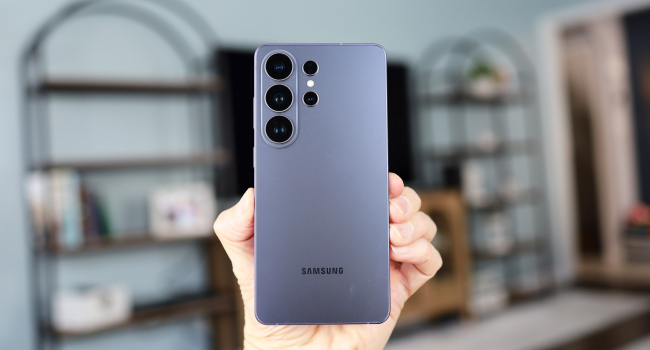
Why new Samsung smartphones don’t have a popular iPhone feature: The company explains why it dropped a MagSafe alternative in the Galaxy S26
In an interview with The Verge, Samsung’s head of mobile R&D, Won-Joon Choi, explained why the new flagship Samsung Galaxy S26 lineup does not include a built-in magnetic wireless charging system similar to MagSafe.
The decision, he said, was pragmatic and based entirely on real user habits and priorities.
Main Argument: 80–90 Percent of Users Use Cases
According to Samsung’s internal statistics, between 80 and 90 percent of smartphone owners use protective cases. For this reason, the company chose not to integrate a magnetic ring directly into the phone’s body.
“There is already a significant number of accessories on the market with built-in magnetic elements,” the executive noted. In other words, users who want magnetic attachment — for car charging mounts, holders, wallets, and other accessories — can simply buy a compatible magnetic case without sacrificing anything in the smartphone itself.
A Trade-Off Between Thickness and Battery Life
If Samsung had embedded a magnetic ring inside the device, engineers would have faced two options:
- Increase the thickness of the phone
• Reduce battery capacity
Both were considered unacceptable. Even an extra millimeter of thickness or a loss of 100–200 mAh of battery capacity would be far more noticeable to most users than the absence of built-in magnets.
The company emphasized that such a compromise does not justify the consumer value — especially when magnetic cases are widely available and relatively inexpensive.
Possible Return in the Future
Samsung has not ruled out introducing a MagSafe-like solution in the future. According to Won-Joon Choi, the company is open to implementing the technology once it can be done without compromising device thickness or battery capacity.
For now, the priority remains maximum battery life and a slim design.
What This Means for Users
If you are used to MagSafe and frequently use magnetic accessories, you can simply purchase a magnetic case — there are dozens available for the Galaxy S26.
If you care more about a thinner body and longer battery life, Samsung’s decision aligns with those priorities.
The move appears logical and balanced — based on real usage data rather than marketing appeal.
In Brief
Samsung decided against integrating a built-in MagSafe alternative into the Galaxy S26 in order to avoid increasing thickness or reducing battery capacity. According to the company, 80–90 percent of users already use cases, and magnetic accessories are widely available separately. The technology may return in the future if it can be implemented without compromising size or battery life. The decision reflects a practical, user-focused approach.
- Related News
- Blue light from screens: Is it really dangerous for eyes, and what should you know?
- Top flagships of August 2026: Experts name the five best smartphones
- A simple way to spend less time on your phone: Choosing your own goals?
- Foldable iPhone appeals to almost no one: Three-quarters of Americans don't want one
- The anniversary iPhone 20 will be as thin as the Air: what the insider revealed
- Apple prepares to raise iPhone prices following Samsung and Google
- Tech Jobs
- Most read
month
week
day
- Top tablets of August 2026: Experts name the best five 1758
- 50,000 subscriptions and AI for schools: How Armenia plans to use artificial intelligence in education 901
- Two comets will be visible in Autumn 2026 865
- Samsung unveils monitor with record-breaking 1100 Hz refresh rate 753
- A simple way to spend less time on your phone: Choosing your own goals? 630
- How to work with neural networks properly: 5 rules that actually help 620
- NASA successfully launches Nancy Grace Roman space telescope – "Hubble's successor" 576
- DeepSeek or ChatGPT: Which is better in 2026? 574
- New Apple CEO to refresh top management team: What we know 572
- Anthropic teaches AI to control real-world machines 558
- Archive