


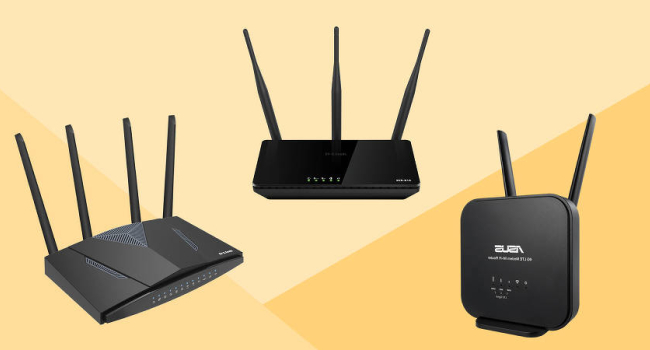
5 important nuances that will save you from disappointment when using a 4G router
4G routers have become a real lifesaver for summer houses, villages, and new buildings where fiber-optic internet has not yet arrived. But for your connection to be truly stable and fast, you need to consider several “hidden pitfalls” before buying and setting up the device.
The tariff: not every “unlimited” plan works with a router
Most standard smartphone plans either forbid or severely restrict Wi-Fi tethering. The operator detects router usage by TTL and IMEI and may throttle the speed to 64–128 Kbit/s or block tethering altogether. Look for plans labeled “for modem/router” or special “home/country unlimited.” In 2025, truly unlimited data is rare — usually you get 300–1000 GB at full speed, then throttling to 10–30 Mbit/s.
Torrents and P2P: the operator’s main enemy
Almost all operators filter peer-to-peer traffic. As soon as you start downloading via uTorrent or qBittorrent, the speed may drop drastically, and your SIM card may be placed under “fair use restrictions.” Solutions: TTL fix (64 → 65), a VPN on the router, or choosing an operator that does not throttle torrents (there are fewer each year).
Not every “4G router” is actually 4G
Many devices on the market — such as Keenetic 4G (KN-1213), older TP-Link TL-MR6400 revisions, and some Xiaomi models — do not have a built-in modem, only a USB port. Without an external 4G modem, they simply do not work. Before buying, make sure the device has a slot for a regular SIM card and a built-in LTE module (Quectel, Fibocom, Simcom, etc.).
Coverage: operator maps are not always accurate
Official coverage maps show an idealized picture, while reality can be different — especially in low areas, behind forests, or inside brick buildings. The most reliable method: visit the location with phones from different operators (MTS, Beeline, MegaFon, Tele2, Yota) and test signal strength and speed in the specific rooms you need. Ideally also check with an external antenna on the roof or at least near a window.
Wired internet is still better (if available)
Even the most powerful 4G router cannot match fiber optics in stability and latency. Mobile networks may also be throttled during military exercises, emergencies, or simply due to base-station overload. The 2025 golden standard is hybrid routers (Keenetic Hero 4G+, Huawei B535, Zyxel LTE5388) that prioritize wired internet while keeping 4G as a backup channel with automatic failover.
In brief
Before buying a 4G router, make sure that:
- your tariff allows tethering and does not throttle torrents,
• the device has a built-in modem and SIM slot,
• the operator’s signal is actually good at your location,
• and ideally, use 4G as a backup rather than the main connection.
This way, internet in a summer house or an apartment without fiber will be a pleasure, not a source of frustration.
- Related News
- Samsung unveils monitor with record-breaking 1100 Hz refresh rate
- How to recover a corrupted USB flash drive: A practical guide
- Memory shortage hits the budget market: Why are smartphones under $100 disappearing from the market?
- Expert explains why smartphone storage quietly fills up
- How much RAM do you really need for gaming in 2026
- A full-fledged DLSS equivalent is coming to smartphones
- Tech Jobs
- Most read
month
week
day
- Two comets will be visible in Autumn 2026 1250
- DeepSeek or ChatGPT: Which is better in 2026? 1021
- NASA successfully launches Nancy Grace Roman space telescope – "Hubble's successor" 666
- Anthropic teaches AI to control real-world machines 648
- New Apple CEO to refresh top management team: What we know 632
- Cosmonaut Harutyun Kiviryan passes pre-flight exam on ISS simulator 619
- Scientists have learned to transmit data by laser through atmospheric disturbances 618
- Beijing opens "Kindergarten" for robots: Machines learn from their own mistakes 597
- What will happen to the human body on Mars? 583
- Dark matter detector captures the weakest neutrinos ever detected 543
- Archive