


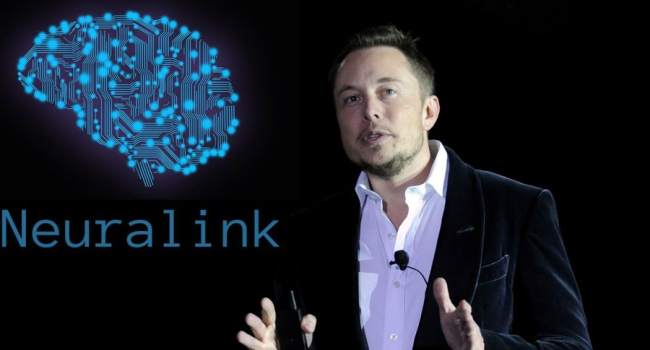
Elon Musk: Neuralink will restore vision to a blind person in 2026
American entrepreneur and visionary Elon Musk announced that his company Neuralink plans to perform a surgery in 2026 that will allow a completely blind person to partially regain sight. He shared the news on his X social media page, commenting on the company’s progress in developing brain–computer interfaces. The statement underscores Neuralink’s ambitious goals and its advances in life-changing technologies.
Musk was responding to Neuralink’s announcement that it had conducted two neuroimplant surgeries in Canada — its first operations outside the United States. These procedures marked a major milestone for the company, founded in 2016 to develop brain–computer interface (BCI) technology.
This is an important step toward making our technologies accessible to more people around the world, Neuralink stated.
The Canadian surgeries show that the company is moving onto the international stage, expanding its testing program for neural chips. This could accelerate research and the adoption of technologies that allow people with disabilities to control devices using only their thoughts.
Restoring Vision: A Goal for 2026
Musk emphasized that one of Neuralink’s key objectives is to partially restore vision for people who are completely blind. The planned operation in 2026 would be a revolutionary step in neurotechnology. Neuralink’s neuroimplants are designed to directly connect the brain to external devices, bypassing damaged parts of the nervous system and making it possible to restore lost functions such as sight.
While details of how this will be achieved remain undisclosed, Neuralink’s approach involves miniature electrodes that stimulate neurons in the brain’s visual cortex. This could allow blind individuals to perceive visual signals such as flashes of light or basic shapes.
Neuralink’s Achievements: From Mind-Controlled Computers to Global Expansion
Neuralink has already achieved notable results. The company has carried out three successful neuroimplant surgeries:
- January 2024: the first U.S. operation, after which the patient was able to control a computer with thought alone.
- August 2024: a second successful surgery, reported by Musk.
- January 2025: a third successful procedure, with another patient learning to interact with a computer via implant.
In June 2025, the first BCI surgery in China was performed in Shanghai. The patient — a 36-year-old man who lost all his limbs after an electric shock 13 years earlier — was able to play chess and video games by controlling a computer entirely with his mind. This case highlighted how neural interfaces can significantly improve the quality of life for people with severe physical disabilities.
How Does Neuralink Work?
Neuralink develops brain chips implanted into the cerebral cortex. These devices:
- Contain thousands of microelectrodes capable of recording and stimulating neural activity.
- Connect wirelessly to external devices (such as computers or smartphones).
- Allow people with paralysis, blindness, or other neurological conditions to interact with technology and potentially regain lost functions.
The technology is still in clinical trials but already shows promise for treating paralysis, blindness, and hearing loss.
Prospects and Challenges
Neuralink’s vision restoration goal is ambitious but comes with challenges:
- Technical limits: creating an interface capable of transmitting precise visual information to the brain requires advanced algorithms and high accuracy.
- Safety: the long-term effects of brain implants remain under study.
- Ethics and accessibility: international expansion raises questions about cost and the availability of the technology to the wider public.
Nevertheless, successes in Canada and China show Neuralink’s steady progress. The company’s recently announced expansion of its volunteer recruitment program could speed up research and bring the technology closer to millions of people.
In Brief
Elon Musk’s announcement that Neuralink aims to restore sight to a blind person in 2026 highlights the revolutionary potential of brain–computer interfaces. Successful surgeries in the U.S., Canada, and China have already shown the technology’s ability to transform lives. If Neuralink achieves its goal, it will mark a new milestone in medicine and technology, opening the door to restoring vision, hearing, and other lost functions. For now, the world is closely watching as Musk’s company continues to push the boundaries of what is possible.
- Tech Jobs
- Most read
month
week
day
- A deep partial lunar eclipse on 27–28 August: an almost total "Blood Moon" 941
- Google now forces a 24-hour wait before APK installation: Android’s new defense against malware 706
- Earth’s microbes may survive on the Moon. Even a bootprint is enough to shield them 634
- Firebird AI Joins UATE as a Strategic Member 633
- Astronomers have found the fastest star in the Milky Way—it races around a black hole at 8% of the speed of light 621
- Quantum entanglement has been achieved directly from sunlight for the first time 603
- How NASA's primary training centre is changing in the era of commercial space stations 555
- The anniversary iPhone 20 will be as thin as the Air: what the insider revealed 487
- Robot knocks out teeth of five year old girl: Incident at Chinese museum leads to lengthy compensation dispute 442
- From Excel to AI: A startup by specialists who relocated from Iran to Armenia helps businesses make sense of their data 422
- Archive