


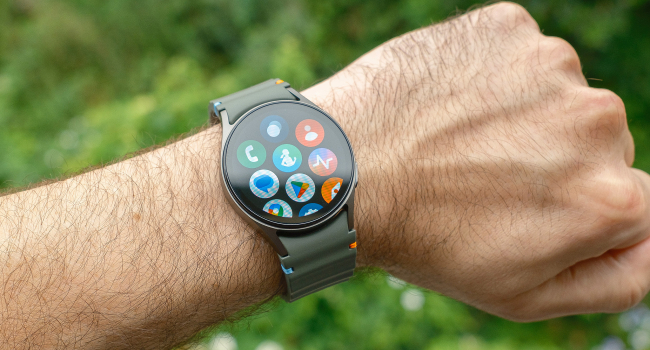
Why is Samsung losing ground in the smartwatch market in 2025?
In the first quarter of 2025, the global smartwatch market experienced its fifth consecutive quarterly decline, shrinking by 2% year-over-year, according to a report by Counterpoint Research. However, the situation proved especially challenging for Samsung: its smartwatch and wearable shipments plummeted by 18% compared to Q1 2024—one of the steepest drops among major players, as reported by GSMArena. While Samsung struggles to stay in the top tier, Chinese brands like Huawei and Xiaomi are showing rapid growth, and Apple remains the market leader. What’s behind Samsung’s downturn, and can it regain its footing?
Market Dynamics: Samsung Overshadowed by Competitors
According to Counterpoint, global smartwatch shipments in Q1 2025 totaled around 43.3 million units, a 2% decrease from Q1 2024. Samsung shipped 3.4 million devices (including smartwatches and fitness trackers), landing in fourth place with a 7.5% market share—down from 8.8% a year earlier. For comparison:
- Apple retained the top position with a 20% market share, despite a 9% decline in shipments due to lackluster updates in the Apple Watch Series 10 and patent disputes in the U.S.
- Huawei saw a 53% surge in shipments, capturing 16% of the market, driven by popularity in China.
- Xiaomi also grew by 53%, reaching a 10% market share thanks to the success of its Watch S1 and Redmi Watch lines.
- Imoo, focused on kids' smartwatches, grew 23%, tying with Samsung at 7%.
Earlier in 2024, Samsung had been on the rise, with a 3% increase in shipments and a 9% market share, briefly placing it in third. But by Q1 2025, that momentum reversed sharply, and Xiaomi overtook Samsung.
Why Is Samsung Falling Behind?
Analysts point to several key reasons behind Samsung’s decline:
- Growth of the Chinese Market
China became the largest smartwatch market in Q1 2025, accounting for 29% of global shipments with a 37% year-over-year increase. Local brands like Huawei, Xiaomi, and Imoo dominate due to competitive pricing and tailored features, particularly in the children’s segment. - Decline in India
India, once a major growth engine, saw a 33% drop in shipments due to longer replacement cycles, lack of innovation, and a subpar user experience. This hit Samsung hard, as it had heavily targeted this region. - Shifting Consumer Preferences
Consumers are increasingly favoring devices priced between $100–200, which grew by 21%, while the budget segment (under $100) shrank by 17%. Despite launching models like the Galaxy Watch FE, Samsung has struggled to meet the demand for feature-rich mid-range options. - Competition and Lack of Innovation
While Galaxy Watch 7 and Galaxy Watch Ultra received positive reviews, they lacked breakthrough features to rival Huawei’s advanced health sensors or Xiaomi’s affordability. Patent issues—similar to Apple’s ban on blood oxygen sensors in the U.S.—may have also affected Samsung’s brand perception.
Competitors’ Strengths
- Huawei: 53% growth driven by strong performance in China and focus on advanced health monitoring (e.g., blood pressure, sleep apnea).
- Xiaomi: Success fueled by affordable devices like the Redmi Band 5 (~$30) and expansion into Wear OS-powered smartwatches.
- Imoo: Kids’ smartwatches were the only consistently growing segment in 2024, up 22%, reflecting parents’ demand for child-tracking devices.
- Apple: Despite shipment declines, Apple maintains dominance due to iOS user loyalty and seamless ecosystem integration. However, weak updates and the absence of new Ultra models have tempered growth.
Samsung’s Outlook: Hope Lies in Galaxy Watch 8
Samsung is preparing for a comeback. The company is set to unveil the Galaxy Watch 8, Galaxy Watch 8 Classic, and potentially Galaxy Watch Ultra 2 at its Galaxy Unpacked event on July 9, 2025. These models are expected to feature improved health sensors (possibly for sleep apnea and blood pressure) and integration with Gemini AI, which could boost their appeal.
Samsung also plans to expand its ecosystem with the release of Galaxy Z Fold 7, Z Flip 7, and Z Flip FE, aiming for device synergy to drive sales.
Counterpoint analysts predict the smartwatch market will recover in 2025, growing by around 3%, fueled by the adoption of AI features and new health-tracking sensors. With its experience in Wear OS and partnership with Google, Samsung has a chance to reclaim lost ground—if it focuses on innovation and competitive mid-range models.
Conclusion
Samsung’s 18% drop in Q1 2025 shipments is a warning sign: the company has lost ground to Chinese competitors and slipped to fourth place with a 7.5% market share. The rise of the Chinese market, decline in India, and shifting demand toward mid-range smartwatches have created a tough environment. However, the upcoming Galaxy Watch 8 lineup and advanced technologies such as AI integration and new health sensors offer a path to recovery. The key question is whether Samsung can deliver enough innovation to regain consumer trust and outpace rivals like Huawei and Xiaomi in the race for smartwatch leadership.
- Related News
- Can you swim in the sea with a smartwatch?
- Smart gadgets 2026: Five devices that truly make life easier
- What gadgets is Apple preparing for 2027?
- Apple is holding back several key iOS 27 features for the fall presentation
- Apple is preparing a successor to AirPods: Its first smart glasses are expected to arrive in 2027
- Google unveils the screen-free Fitbit Air Fitness Band
- Tech Jobs
- Most read
month
week
day
- Firebird AI Joins UATE as a Strategic Member 644
- Earth’s microbes may survive on the Moon. Even a bootprint is enough to shield them 642
- Astronomers have found the fastest star in the Milky Way—it races around a black hole at 8% of the speed of light 626
- Quantum entanglement has been achieved directly from sunlight for the first time 611
- How NASA's primary training centre is changing in the era of commercial space stations 567
- The anniversary iPhone 20 will be as thin as the Air: what the insider revealed 564
- From Excel to AI: A startup by specialists who relocated from Iran to Armenia helps businesses make sense of their data 523
- Robot knocks out teeth of five year old girl: Incident at Chinese museum leads to lengthy compensation dispute 490
- Why Bill Gates is no longer an AI optimist: Three major threats of AI 472
- How to make your new smartphone more secure: expert tips 455
- Archive