


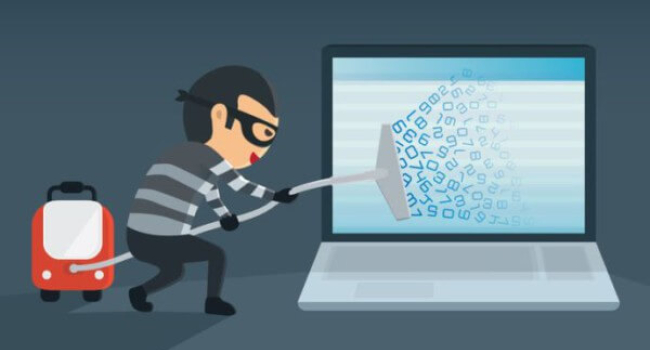
The next click could spark major trouble: 5 potential threats in 2025
The world is changing rapidly—each year, technologies become more complex, intelligent, and integrated into everyday life. Artificial intelligence, the Internet of Things, quantum computing, and remote work open up incredible opportunities but also introduce new vulnerabilities. The year 2025 promises to be a turning point in cybersecurity: digital risks are growing, and traditional protection methods are no longer sufficient to counter modern threats.
In this article, we will explore five key challenges that, according to experts, will shape the cyber landscape in 2025. These threats could impact data security, trust in digital systems, and the resilience of critical infrastructure. What exactly might await us? Read on to find out…
Social Engineering Powered by Generative AI
Generative artificial intelligence has reached new heights: it creates texts, videos, and audio that are indistinguishable from real ones. Hackers are using AI to craft hyper-realistic phishing attacks that deceive even the most cautious users. As Kevin Tian, CEO and co-founder of Doppel, told SecurityWeek: “In 2025, social engineering will become the primary security threat—amplified by generative AI. The technology enables the creation of convincing fakes, such as deepfake videos or audio, that are nearly impossible to distinguish from authentic content.”
The targets of such attacks will include individuals, small and medium-sized businesses, and employees of large companies. Those relying on remote work and digital communications are particularly vulnerable.
What might such an attack look like? Today, AI analyzes publicly available data from social media to make messages alarmingly personalized. Imagine an email from your boss, complete with an attached audio message in their voice, urgently requesting a money transfer to a “new supplier account.” Or a video call where your colleague (actually a deepfake) asks for access to the corporate network. One click, and your data or finances are in the hands of cybercriminals.
Attacks on IoT Devices in Smart Cities
“With the explosive growth of IoT and multi-cloud environments, we will see a significant increase in vulnerabilities. Protecting these interconnected systems will be one of the main challenges in 2025,” notes Antoinette Hodes, Global IoT Solutions Architect at Check Point.
Indeed, the Internet of Things has become firmly entrenched in our lives: smart homes, connected cars, and urban traffic management systems. However, the weak security of IoT devices makes them easy prey. The targets are not only individuals who own smart homes but also city administrations and utility services. The very concept of smart cities, which now require increasing investments in cybersecurity, is at risk. Hackers could compromise smart traffic lights, causing chaos on the roads, or gain access to smart home systems, blackmailing owners with leaked data from surveillance cameras. Large-scale attacks could paralyze public transportation or power supply systems.
Targeted Supply Chain Attacks
Brian McHenry, head of Check Point’s cloud security engineering department, emphasizes: “Supply chain attacks are becoming increasingly popular as attackers use AI to map dependencies between cloud services and SaaS applications, enabling strikes with a cascading effect.”
What does this mean? Hackers infiltrate the system of a small software supplier, embedding malicious code into an update that then spreads to larger companies. In other words, hackers don’t attack major corporations directly but target their suppliers and partners, who often have weaker protections.
AI-Powered Ransomware
Ransomware has evolved: it now uses AI to select targets, optimize attacks, and evade detection. As an expert noted in SC Media, “AI-driven ransomware automates attack stages and even makes dynamic decisions, identifying the most critical systems to target and optimizing attacks for maximum success.” In essence, AI algorithms analyze a company’s data, identify vulnerabilities, and encrypt critical databases or management systems. For example, a hospital could lose access to patient data, or a power plant could lose control over its systems. Hackers then threaten to leak confidential information unless a ransom is paid.
Quantum Attacks on Cryptography
In 2025, state institutions, banks, tech giants, and cryptocurrency platforms could become targets for tech-savvy attackers. Virtually the entire digital world, which relies on modern encryption standards, is at risk.
Quantum computers in 2025 are reaching a level capable of undermining traditional encryption algorithms like RSA and ECC, threatening the foundations of digital security. Paal Aaserudseter, a sales engineer at Check Point, warns: “By 2025, we will see the first tangible signs of quantum computing’s impact on cybersecurity. Organizations must begin transitioning to quantum-resistant encryption methods.”
Hackers with access to quantum computers could break encryption, intercepting data previously considered secure. This could lead to leaks of military secrets, financial data, or personal information of millions of users. Even without direct access to quantum machines, experts believe hackers may already be collecting encrypted data to decrypt it later.
- Related News
- SonicWall fixes two critical vulnerabilities that hackers are already using to attack VPNs
- WhatsApp to introduce full passwords instead of PIN codes
- What you must do before disposing of or selling your smartphone: useful tips
- How to make your new smartphone more secure: expert tips
- OpenAI warns of the dawn of a new era of autonomous cyberattacks
- Attackers use phantom domains generated by AI for phishing
- Tech Jobs
- Most read
month
week
day
- Two comets will be visible in Autumn 2026 1258
- DeepSeek or ChatGPT: Which is better in 2026? 1038
- NASA successfully launches Nancy Grace Roman space telescope – "Hubble's successor" 666
- Anthropic teaches AI to control real-world machines 650
- New Apple CEO to refresh top management team: What we know 634
- Scientists have learned to transmit data by laser through atmospheric disturbances 623
- Cosmonaut Harutyun Kiviryan passes pre-flight exam on ISS simulator 623
- Beijing opens "Kindergarten" for robots: Machines learn from their own mistakes 603
- What will happen to the human body on Mars? 588
- Dark matter detector captures the weakest neutrinos ever detected 550
- Archive