


The gap between the most powerful and the weakest mobile chip has reached 15 times
Experts at GSMArena conducted a large-scale comparison of 70 mobile processors released over the past 2.5 years. The results show a huge performance chasm between flagship and budget solutions.
Main finding
The difference between the most powerful chip and the weakest one still being installed in new smartphones has reached a 15-fold gap. Testing was conducted in GeekBench (single-core and multi-core modes) and 3DMark Wild Life Extreme (graphics).
Current balance of power
- Apple A19 Pro — clear leader in single-core performance (best system responsiveness and everyday task handling).
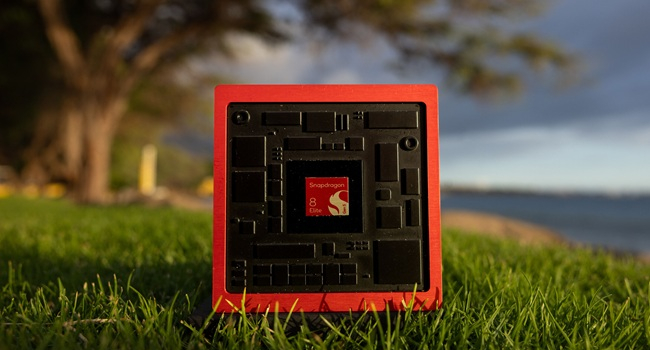
- Snapdragon 8 Elite Gen 5 (especially the overclocked version) — dominates in multi-core tasks and graphics.
- MediaTek Dimensity 9500 and Samsung Exynos 2600 — are in the same league as the leaders.
The flagship segment has become very close: differences between chips from Qualcomm, MediaTek, Samsung, and Apple are now minimal and rarely noticeable in real-world usage.
Key trends
- Graphics are growing faster than CPU. The gap in graphics performance between top-tier and budget solutions is measured in tens of times.
- The mid-range segment is actively catching up to flagships. Some MediaTek Dimensity 8000 series chips offer nearly flagship-level graphics at a significantly lower price.
- The budget segment is lagging behind. The cheapest processors are developing noticeably more slowly than the rest.
- Google Tensor G5 shows decent CPU performance but is significantly weaker than competitors in graphics.
In brief
According to GSMArena, the performance gap between the most powerful and the weakest current mobile chip has reached 15 times. Flagship solutions from different manufacturers (Snapdragon 8 Elite Gen 5, Dimensity 9500, A19 Pro, Exynos 2600) are roughly on par, with Qualcomm leading in graphics and Apple in single-core performance. The mid-range is quickly catching up to flagships, while the budget segment lags noticeably. Graphics capabilities in mobile chips are developing significantly faster than CPU performance.
- Related News
- Samsung unveils monitor with record-breaking 1100 Hz refresh rate
- How to recover a corrupted USB flash drive: A practical guide
- Memory shortage hits the budget market: Why are smartphones under $100 disappearing from the market?
- Expert explains why smartphone storage quietly fills up
- How much RAM do you really need for gaming in 2026
- A full-fledged DLSS equivalent is coming to smartphones
- Tech Jobs
- Most read
month
week
day
- Two comets will be visible in Autumn 2026 1272
- DeepSeek or ChatGPT: Which is better in 2026? 1056
- NASA successfully launches Nancy Grace Roman space telescope – "Hubble's successor" 666
- Anthropic teaches AI to control real-world machines 651
- New Apple CEO to refresh top management team: What we know 637
- Cosmonaut Harutyun Kiviryan passes pre-flight exam on ISS simulator 630
- Scientists have learned to transmit data by laser through atmospheric disturbances 628
- Beijing opens "Kindergarten" for robots: Machines learn from their own mistakes 608
- What will happen to the human body on Mars? 594
- Dark matter detector captures the weakest neutrinos ever detected 558
- Archive