


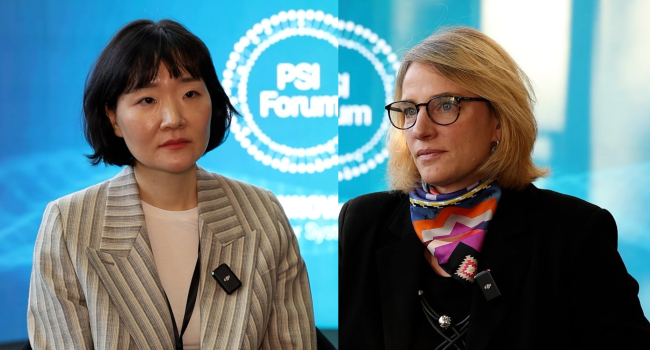
Why traditional city governance no longer works — and why officials need to think like startups: Interview with UNDP representatives
Modern cities live and develop in an extremely unpredictable world: economic shocks, migration, climate change, technological shifts—all of these overlap and turn development management into a task without clear rules. This is felt especially acutely in small cities, where resources are limited, yet the challenges are no less significant than in capital cities.
To discuss how approaches to managing such cities are changing, why “perfect plans” no longer work, and what modern cities have in common with startups, NEWS.am Tech spoke with Irena Cerovic, Head of the Innovation Team at the United Nations Development Programme in Europe and Central Asia, and Yaera Chung, Regional Innovation Specialist at the United Nations Development Programme in Europe and Central Asia, who participated in the Public Sector Innovation Forum III held in Yerevan on March 17–18.
When a Plan Becomes Outdated Before It Can Be Implemented
The classical model of city governance was long built on a clear logic: identify a problem, develop a solution, approve a plan for several years ahead, and proceed with its step-by-step implementation.
But today, this logic is breaking down.
As Irena Cerović notes, cities in the modern world face a new type of problem—complex, multilayered, and rapidly changing. Migration affects labor markets, climate impacts infrastructure and the economy, and technology reshapes employment and education. These processes cannot be isolated from one another or predicted with precision. In such conditions, five- or ten-year plans lose relevance before they are even halfway implemented. Attempting to “complete the project” in such a situation often means ignoring the fact that reality has already changed and the project has become outdated.
That is why a fundamentally different approach is now required—not a static one, but an adaptive one.
The Portfolio Approach: A System of Experiments Instead of a Single Solution
Initiatives of the United Nations Development Programme implemented in Armenia and aimed at developing small cities, such as Mayors for Economic Growth (M4EG), funded by the European Union, and the City Experiment Fund (CEF), funded by the Ministry of Foreign Affairs of the Slovak Republic, introduce what is known as the “portfolio approach.”
Unlike a traditional project, which has a clearly defined goal and a predetermined outcome, the portfolio approach is applied where solutions are not obvious.
Yaera Chung explains this with a simple example: building a road is a task with a clear result. But solving traffic congestion is something entirely different. Even if roads are expanded or regulations are changed, human behavior remains unpredictable and depends on many factors—therefore, there is no single simple solution to this problem.
These are exactly the kinds of challenges modern cities face.
The portfolio approach does not involve searching for one “correct” solution, but rather launching a set of interconnected initiatives. They are tested in parallel, complement each other, and gradually build an understanding of what actually works.
Why Cities Need to Think Like Startups
Not long ago, city governance and startup culture seemed like opposites. The former was associated with stability and predictability, the latter with risk and experimentation.
Today, that boundary is fading. A startup operates under uncertainty: it does not know in advance which product will succeed, so it tests hypotheses, quickly abandons ineffective solutions, and constantly adapts. Modern cities find themselves in a very similar situation. When dealing with complex social and economic problems—from population decline to climate risks—it is impossible to define a precise solution in advance. Any strategy becomes merely a hypothesis that must be tested in reality.
The portfolio approach promoted by UNDP essentially replicates this logic: a city defines a direction, launches several initiatives, observes the results, and adjusts its course. In this sense, a municipality begins to function like a startup—except that instead of a product, it works with the urban environment, and instead of customers, it serves residents. This is what allows it not only to react to change, but to move forward in conditions where not everything can be anticipated in advance.
Learning in the Process, Not at the End
One of the key shifts here is abandoning the idea that analysis and conclusions should come after a project is completed. By then, it is already too late. Instead, learning becomes a continuous process throughout implementation.
Cities begin to track how systems respond to changes, which solutions are effective and which are not, and adjust their actions immediately. This means that adaptation is built into the logic of governance itself, rather than being a reaction to failure.
According to Irena Cerović, it is precisely this kind of “adaptive muscle” that enables cities to cope with crises—not through luck or individual strong leaders, but through a systemic ability to respond quickly and adjust.
UNDP’s work in Armenia, within the programs “Mayors for Economic Growth” and the “City Experiment Fund,” covers eight cities where new governance approaches are being implemented. The results show that even with limited resources, systemic change is possible with the right approach, and that the portfolio method can indeed become a tool for resilience in the challenging conditions modern cities face.
In Areni, for example, tourism development had long remained an initiative of individual businesses. The municipality was barely involved in shaping strategy. However, within the new approach, a mission for sustainable tourism was formulated, around which various initiatives began to take shape—from infrastructure solutions to rethinking local resources, including gastronomy. As a result, not just a new tourism product emerged, but an entire ecosystem that creates jobs and engages the community.
A similar transformation took place in Stepanavan. Instead of trying to attract people from outside, the city focused on creating conditions for the lives and self-realization of its residents. Cultural programs, educational spaces, and new institutions emerged.
This shift in logic—from “attract resources” to “unlock internal potential”—is becoming key in all such cases.
These approaches are especially important in times of crisis.
For example, in Alaverdi, during flooding, the city proved better prepared to interact with the national response system—precisely because it was already operating in an adaptive management mode.
The Community as Part of Governance, Not an Audience
One of the most fundamental elements of the new approach is the participation of city residents. This is not about formal consultations, but about deep engagement.
The process begins with so-called “deep listening”—open conversations with citizens about their real needs and opportunities. This is followed by a stage of collective sense-making, involving various groups—from activists to NGOs. Finally, there is co-creation of solutions.
Yaera Chung emphasizes that this is an iterative process requiring time and trust. People do not always immediately articulate their real needs, and initial conversations often produce superficial answers. Therefore, teams return to communities, уточняют, перепроверяют, собирают разные точки зрения.
In some cases, citizen participation goes beyond discussion—community representatives become part of decision-making processes.
Is Money Really the Main Problem?
At first glance, the main limitation for small cities is a lack of funding. However, both experts question this seemingly obvious assumption.
In practice, resources usually exist—but they are fragmented and often not aligned with the real needs of cities. Funding may come from various sources: private investment, international financial institutions, government programs, even crowdfunding. The problem is that these flows are not synchronized with local priorities.
A possible solution is to form sets of interconnected initiatives that can attract funding and create a coherent investment structure. The process often begins with small grants that help define a mission, mobilize the community, and prepare the city for larger investments.
Thus, urban development today is less a question of the availability of resources and more a question of the ability to manage them and unite different forces around a shared goal.
What Is a “Thriving City” Today?
What do we even mean by a “thriving city”? What should such a city look like in the 21st century?
According to the experts, there is no single answer, but key benchmarks can be outlined.
In Yaera Chung’s view, a thriving city is one where people have equal access to opportunities—jobs, education, and basic services. It is a place that takes into account not only economic factors, but also environmental, social, and cultural aspects. And perhaps most importantly, it is a city that enables individuals to realize their potential.
But to achieve this, a modern city must stop being a “project with an endpoint.” Instead, it must become a continuously evolving system with no final solutions, only a direction of movement. Success is defined not by how accurately a plan is executed, but by how well a city can learn, adapt, and work together with its residents.
These are the cities that, it seems, will define the future.
- Related News
- From Excel to AI: A startup by specialists who relocated from Iran to Armenia helps businesses make sense of their data
- Firebird AI Joins UATE as a Strategic Member
- Armenians have much to offer the world: A Qatari investor on choosing startups and Armenia's potential
- Do AI data centers use water for cooling? What happens inside Firebird and other facilities
- Not everyone needs to build the next unicorn: Why the world needs more than just startups? Interview with Helmut Kranzmaier
- Four minutes that can change a startup's fate: How to prepare a pitch that actually gets heard?
- Tech Jobs
- Most read
month
week
day
- From Excel to AI: A startup by specialists who relocated from Iran to Armenia helps businesses make sense of their data 607
- The anniversary iPhone 20 will be as thin as the Air: what the insider revealed 594
- How NASA's primary training centre is changing in the era of commercial space stations 572
- Robot knocks out teeth of five year old girl: Incident at Chinese museum leads to lengthy compensation dispute 532
- Why Bill Gates is no longer an AI optimist: Three major threats of AI 527
- Top flagships of August 2026: Experts name the five best smartphones 499
- How to make your new smartphone more secure: expert tips 471
- 10,000 tiny probes to Saturn's rings and robots in lunar caves: NASA funds 18 visionary ideas 466
- "Dark photons" back in play: scientists revise constraints on dark matter 452
- Apple prepares to raise iPhone prices following Samsung and Google 443
- Archive