


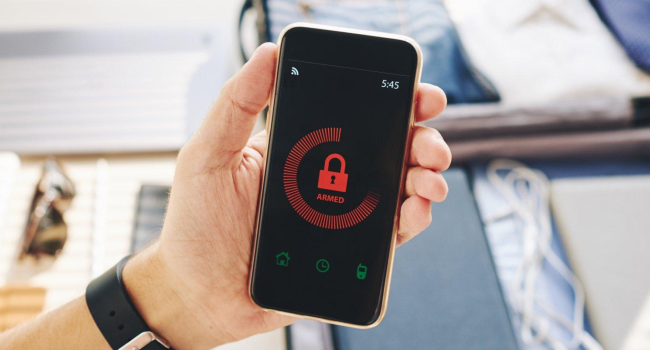
How to safely store important documents on your smartphone
Keeping scans of your passport, driver’s license, bank cards, insurance policies, or other sensitive documents directly in your phone’s gallery is one of the most common — and risky — mistakes. If the phone is stolen, hacked, or even sent for repair, these files may become easily accessible.
According to IT expert Vladimir Zykov, editor-in-chief of the tech publication Runet, a few simple practices can significantly reduce the risk of data leaks.
Core digital safety rules
1. Never keep documents in the gallery or regular folders
Your phone’s Gallery or Files folders are among the most vulnerable locations. Even when the device is locked, some apps — including malicious ones — can potentially access media files.
Recommendation:
Delete all document scans from visible folders.
2. Use secure storage inside the smartphone
Most modern phones offer built-in protected storage areas.
Examples:
Android
- Samsung — Secure Folder
- Xiaomi / HyperOS — Private Safe
- Huawei / Honor — Private Space
iPhone
- Hidden and Recently Deleted albums in Photos
- Locked Folder (iOS 16+)
- Third-party encrypted file managers
These areas are protected by PIN codes, passwords, or biometrics and remain invisible to standard file managers.
3. Encrypt files before storing them
The safest method is to place documents inside a password-protected archive (ZIP or RAR).
Use a strong password:
- at least 12–16 characters
- mix of letters, numbers, and symbols
Popular apps include:
- RAR
- 7-Zip
- Documents by Readdle
- WinZip
- Bandizip
After creating the encrypted archive, delete the original files.
4. Store backups in encrypted cloud services
A second layer of protection is storing documents in encrypted cloud storage with two-factor authentication (2FA).
Recommended services include:
- Proton Drive — full end-to-end encryption
- Tresorit
- pCloud (Crypto Folder option)
- com
- iCloud with Advanced Data Protection
Standard services such as Google Drive or Dropbox are safer when additional encryption is used.
5. Secure the smartphone itself
Even the best storage practices won’t help if the phone itself isn’t protected.
Use:
- a strong PIN (6–8 digits) or long password instead of a simple pattern lock
- biometric authentication (fingerprint or face recognition)
- remote device wipe features like
- Find My Device
- Find My iPhone
Also set automatic screen lock to 1 minute or less.
Additional precautions
- Install apps only from official stores (Google Play or App Store)
- Keep your system and apps updated
- Review app permissions, especially access to photos or files
- Avoid suspicious links and public Wi-Fi networks without a VPN
Quick security checklist
For maximum protection:
- Remove all document scans from the gallery
- Place documents in an encrypted archive
- Store the archive in a secure folder or encrypted cloud
- Enable two-factor authentication for cloud accounts
- Use a strong PIN/password + biometrics
- Enable remote wipe in case the phone is lost
In brief
Sensitive documents such as passports, ID cards, and bank details should never be stored directly in the smartphone gallery. The safest approach is encrypted archives stored in a secure phone folder or end-to-end encrypted cloud storage like Proton Drive or Tresorit. Combined with strong passwords, biometrics, two-factor authentication, and remote device wiping, these steps dramatically reduce the risk of data exposure even if your phone is lost, stolen, or hacked.
- Related News
- WhatsApp to introduce full passwords instead of PIN codes
- Google now forces a 24-hour wait before APK installation: Android’s new defense against malware
- Service life vs warranty: What's the difference and why your gadget doesn't "die" after two years
- How to choose a TV and not overpay for features you'll never use
- Smart roads of the future: The highway will "see" and warn the driver
- Expert explains why smartphone storage quietly fills up
- Tech Jobs
- Most read
month
week
day
- Two comets will be visible in Autumn 2026 1268
- DeepSeek or ChatGPT: Which is better in 2026? 1049
- NASA successfully launches Nancy Grace Roman space telescope – "Hubble's successor" 666
- Anthropic teaches AI to control real-world machines 650
- New Apple CEO to refresh top management team: What we know 637
- Cosmonaut Harutyun Kiviryan passes pre-flight exam on ISS simulator 627
- Scientists have learned to transmit data by laser through atmospheric disturbances 625
- Beijing opens "Kindergarten" for robots: Machines learn from their own mistakes 605
- What will happen to the human body on Mars? 590
- Dark matter detector captures the weakest neutrinos ever detected 555
- Archive