


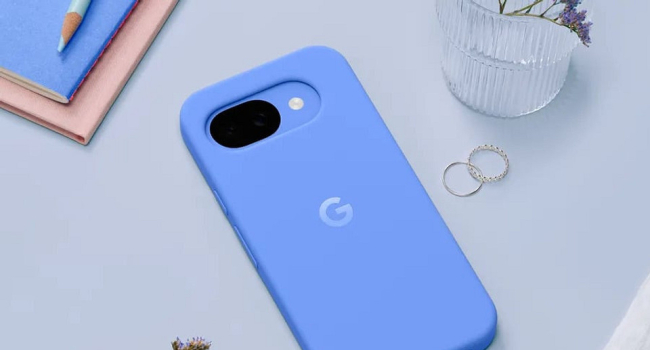
The most boring smartphone of 2026: Google Pixel 10a officially unveiled
Google continues its long-standing “a-series” tradition — affordable yet thoughtfully designed Pixel devices. This time, the company introduced the Pixel 10a, which is essentially a slightly refined and renamed Google Pixel 9a.
Fans were hoping for something new. Instead, they got almost the same phone — now with Android 16 out of the box, seven years of software support, and a strong emphasis on sustainability.
Specifications: Almost Nothing Has Changed
The Pixel 10a keeps the same Google Tensor G4 processor (built on Samsung’s 4nm process), along with 8GB of RAM and either 128GB or 256GB of storage.
Performance remains on par with last year’s model. It’s still fast and responsive for everyday tasks and can handle games at medium to high settings — but don’t expect miracles.
The display is a 6.3-inch Actua OLED panel with a 120Hz refresh rate. Peak brightness has increased from 2,700 to 3,000 nits — a welcome improvement in bright sunlight. Screen protection is now Corning Gorilla Glass 7i instead of Gorilla Glass 3, a small but useful upgrade. Water and dust resistance remains at IP68.
The cameras are unchanged:
- 48MP main sensor
- 13MP ultra-wide
- Same front-facing camera
Where Pixel still shines is software. Features like Gemini, Gemini Live, Camera Coach, Auto Best Take, and Add Me continue to deliver Google’s signature AI-powered photography experience.
The battery is 5,100 mAh. Wired charging has been upgraded from 23W to 30W. Wireless charging is still absent.
The Main Focus: Sustainability
This year, Google placed a strong emphasis on environmental responsibility.
The Pixel 10a uses recycled cobalt, copper, gold, and tungsten. The aluminum frame is made from 100% recycled material, and the packaging is completely plastic-free.
It is currently one of the most environmentally friendly smartphones in the Pixel lineup.
Colors, Price, and Support
The smartphone is available in four colors:
- Obsidian
- Porcelain
- Berry
- Lavender
In the U.S., pricing starts at $500 for the 8GB/128GB version. The 8GB/256GB configuration costs $600. Prices in Europe and other regions will likely be higher due to taxes and retailer markups.
The biggest advantage? Seven years of Android updates and security patches (including regular Pixel Drops). Buying a Pixel 10a in 2026 means support through 2033 — a record level of longevity for a mid-range Android device.
Who Should Buy It?
The Pixel 10a is a classic “workhorse” — no bold experiments, no radical redesign.
If you want:
- Excellent cameras
- Clean Android
- Long software support
- Solid battery life
—and you don’t mind last year’s hardware and familiar design, this is one of the best options around $500.
If you were expecting a design revolution, a new chip, or something groundbreaking, you’re better off looking at the Google Pixel 10 or waiting for the Google Pixel 10 Pro.
In Short
The Pixel 10a is essentially a Pixel 9a with Android 16 out of the box, seven years of updates, and improved sustainability credentials.
Specs include:
- Tensor G4
- 3" 120Hz display with 3,000 nits brightness
- 48MP + 13MP cameras
- 5,100 mAh battery with 30W charging
- Starting at $500
It may be the most boring smartphone of 2026 — but it’s also one of the most reliable and long-lasting mid-range devices you can buy.
- Related News
- Blue light from screens: Is it really dangerous for eyes, and what should you know?
- Top flagships of August 2026: Experts name the five best smartphones
- A simple way to spend less time on your phone: Choosing your own goals?
- Foldable iPhone appeals to almost no one: Three-quarters of Americans don't want one
- The anniversary iPhone 20 will be as thin as the Air: what the insider revealed
- Apple prepares to raise iPhone prices following Samsung and Google
- Tech Jobs
- Most read
month
week
day
- Two comets will be visible in Autumn 2026 1275
- DeepSeek or ChatGPT: Which is better in 2026? 1061
- NASA successfully launches Nancy Grace Roman space telescope – "Hubble's successor" 667
- Anthropic teaches AI to control real-world machines 652
- New Apple CEO to refresh top management team: What we know 637
- Cosmonaut Harutyun Kiviryan passes pre-flight exam on ISS simulator 630
- Scientists have learned to transmit data by laser through atmospheric disturbances 629
- Beijing opens "Kindergarten" for robots: Machines learn from their own mistakes 609
- What will happen to the human body on Mars? 594
- Dark matter detector captures the weakest neutrinos ever detected 559
- Archive