


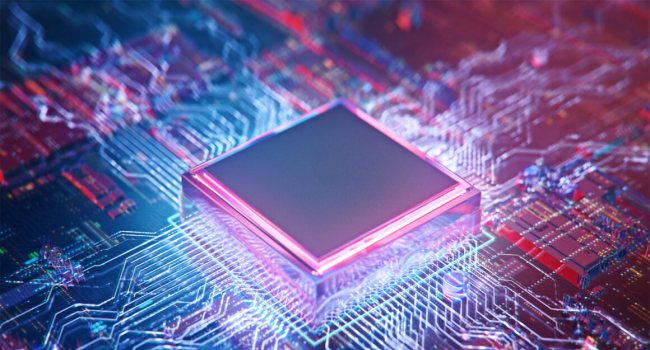
CPU GPU and NPU how different types of processors differ and why they are needed
In modern hardware processors are no longer limited to a single brain of a computer. CPU GPU and NPU are three different specialists each designed for its own tasks. One is a universal controller another is a master of graphics and parallel computing and the third is an expert in artificial intelligence. An explanation follows of how they differ and why in 2026 devices cannot do without all three.
Central processing unit CPU the universal workhorse
The CPU is the classic heart of any PC laptop or smartphone. It is responsible for sequential instruction processing including launching programs running the operating system and handling tasks like spreadsheets or web browsing. Everything that requires precision logic and control goes through the CPU.
Its strength lies in powerful cores ranging from a few to several dozen in high end models which execute tasks sequentially but very accurately. It includes cache memory for fast data access and buses to communicate with the rest of the system. The CPU is universal because nothing runs without it but it is less efficient than specialized chips in massively parallel workloads.
Key characteristics include a small number of powerful cores sequential processing and high precision.
Graphics processing unit GPU the king of parallelism
The GPU is more than just a graphics card chip. It consists of thousands of relatively simple cores designed to work in parallel. Originally this architecture served graphics rendering such as textures lighting and physics in games. Over time the same parallelism made GPUs essential for cryptocurrency mining machine learning and scientific computing.
The GPU should not be confused with the entire graphics card as it is the core component. Sometimes a GPU is integrated into the CPU as an APU or integrated graphics solution. Unlike CPUs which focus on control and precision GPUs focus on throughput processing large amounts of data simultaneously with lower precision.
Key characteristics include a massive number of cores parallel computations and moderate precision. This capability is also why GPU demand once drove graphics card prices sharply upward during crypto booms.
Neural processing unit NPU the AI specialist
The NPU is a newer but already essential component in high end devices. It is optimized specifically for neural networks such as face recognition image generation and speech to text translation. Structurally it resembles a GPU with many parallel units but it is designed for extremely low power consumption and efficient matrix operations.
NPUs are more energy efficient than GPUs which is why they are often integrated into CPUs such as Intel Core Ultra or AMD Ryzen AI or into smartphone system on a chip designs. Software is increasingly adapted to them for example image editors use NPUs for AI filters video conferencing apps use them for noise reduction and translators rely on them for real time processing.
Key characteristics include strict specialization parallel execution lower precision sufficient for AI and minimal power usage.
Why one device needs three different processors
The CPU handles logic control and precision the GPU takes care of graphics and heavy parallel computation and the NPU accelerates AI tasks with minimal energy cost. In 2026 high end PCs and smartphones combine all three. The CPU manages overall operation the GPU renders and computes at scale and the NPU accelerates neural networks. This combination makes devices faster smarter and more efficient.
In brief
The CPU is a universal processor for sequential tasks requiring high precision the GPU is a parallel powerhouse for graphics and computation and the NPU is an energy efficient AI specialist. In modern devices they work together with the CPU coordinating the GPU rendering and the NPU handling intelligence. Without this trio there are neither ultra quality gaming experiences nor fast on device AI and the future belongs to heterogeneous systems.
- Related News
- Samsung unveils monitor with record-breaking 1100 Hz refresh rate
- How to recover a corrupted USB flash drive: A practical guide
- Memory shortage hits the budget market: Why are smartphones under $100 disappearing from the market?
- Expert explains why smartphone storage quietly fills up
- How much RAM do you really need for gaming in 2026
- A full-fledged DLSS equivalent is coming to smartphones
- Tech Jobs
- Most read
month
week
day
- Two comets will be visible in Autumn 2026 1255
- DeepSeek or ChatGPT: Which is better in 2026? 1033
- NASA successfully launches Nancy Grace Roman space telescope – "Hubble's successor" 666
- Anthropic teaches AI to control real-world machines 650
- New Apple CEO to refresh top management team: What we know 634
- Scientists have learned to transmit data by laser through atmospheric disturbances 621
- Cosmonaut Harutyun Kiviryan passes pre-flight exam on ISS simulator 621
- Beijing opens "Kindergarten" for robots: Machines learn from their own mistakes 601
- What will happen to the human body on Mars? 586
- Dark matter detector captures the weakest neutrinos ever detected 547
- Archive