


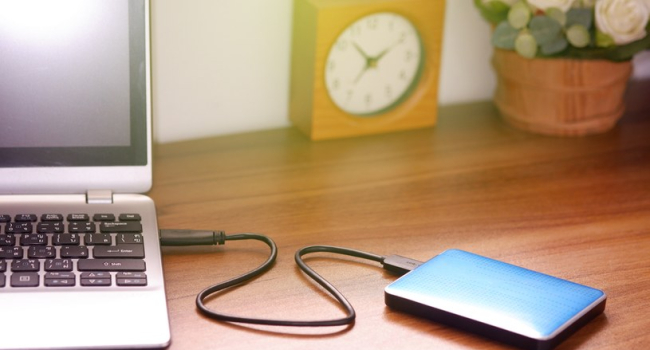
Power banks for charging laptops: How to choose
A power bank can significantly extend your laptop’s battery life, but choosing the right model isn’t simple. Not every external battery designed for smartphones is capable of charging a laptop. Here’s what to pay attention to when selecting a power bank for a laptop.
How to Choose a Power Bank for a Laptop
Charging laptops requires power banks with specific features. These are the key parameters to consider:
Capacity: Look at Watt-Hours, Not Milliamp-Hours
Capacity measured in milliamp-hours (mAh), important for smartphones, is less relevant for laptops due to voltage differences. For example, a 20,000 mAh power bank with a voltage of 3.7 V has a capacity of 74 Wh (20,000 × 3.7 ÷ 1000). For laptops, the optimal capacity is 70–100 Wh — enough for 1–2 charges of an average laptop without significantly increasing weight and size.
Charging Power: At Least 45 W
Unlike smartphones, laptops require higher charging power. The minimum is 45 W, but it’s better to choose models starting at 60 W to ensure stable and fast charging.
Connector Compatibility
Many modern laptops use USB Type-C with Power Delivery (PD) support, which simplifies the choice of a power bank. However, some models, especially older ones, have proprietary round connectors. These require special cables or adapters, which are not always easy to find.
- Related News
- Which MacBook to buy in 2026: A guide to all models
- Why fast charging accelerates battery wear in smartphones and laptops
- Enthusiast turns Google Pixel 9 into a full-fledged laptop with 3D printing
- Apple to raise device prices due to memory shortage
- Why laptop manufacturers are massively returning to 8 GB of RAM
- Apple turns manufacturing defects into profit: how the company uses “defective” processors
- Tech Jobs
- Most read
month
week
day
- Top tablets of August 2026: Experts name the best five 1479
- Top flagships of August 2026: Experts name the five best smartphones 1197
- From Excel to AI: A startup by specialists who relocated from Iran to Armenia helps businesses make sense of their data 1076
- The anniversary iPhone 20 will be as thin as the Air: what the insider revealed 817
- Why Bill Gates is no longer an AI optimist: Three major threats of AI 764
- 50,000 subscriptions and AI for schools: How Armenia plans to use artificial intelligence in education 689
- 10,000 tiny probes to Saturn's rings and robots in lunar caves: NASA funds 18 visionary ideas 674
- Robot knocks out teeth of five year old girl: Incident at Chinese museum leads to lengthy compensation dispute 659
- Apple prepares to raise iPhone prices following Samsung and Google 636
- The Roman space telescope will reveal the Universe as Hubble and JWST cannot 595
- Archive