


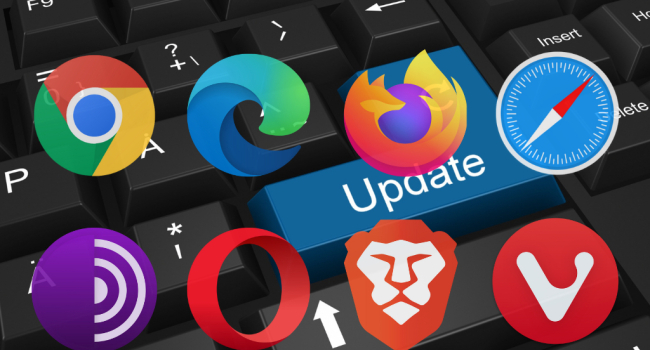
Why you should urgently update Chrome, Edge, and other browsers
Google has released an emergency update for its Chrome browser, addressing a critical vulnerability—CVE-2025-6554—that has already been exploited by attackers. This zero-day threat allows hackers to execute malicious code via specially crafted web pages, posing a serious risk to user data. Experts are urging users to update not only Chrome but also other Chromium-based browsers such as Microsoft Edge, Opera, Brave, and Vivaldi. Here's what’s known about the vulnerability and how to protect your devices.
What Is This Vulnerability?
According to the U.S. National Vulnerability Database (NVD), the CVE-2025-6554 vulnerability allows attackers to:
- Remotely read and write data on a user's device.
- Execute malicious code without any user interaction—just by visiting a compromised website.
Such flaws represent a major security threat, potentially leading to theft of personal data, spyware installation, or even full device takeover. The vulnerability was discovered by Google’s Threat Analysis Group (TAG), a team specializing in the investigation of sophisticated cyberattacks, including phishing, targeted intrusions, and cyber espionage. TAG’s involvement suggests that this flaw may have been used in attacks linked to state actors or advanced hacking groups.
How Did Google Respond?
Google responded swiftly by releasing a patch on June 26, 2025, just one day after the vulnerability was identified. The update is being rolled out through the stable channel for all supported platforms, including Windows, macOS, Linux, Android, and iOS.
In its official statement, Google emphasized the urgency of the update, especially for:
- Enterprise users working with sensitive information.
- Organizations that use Chrome in mission-critical systems.
Although the scope of exploitation appears limited for now, security experts warn that the vulnerability is already being actively exploited, making the update critically important.
Which Browsers Are at Risk?
Because this vulnerability affects the Chromium engine, which powers Chrome, it also threatens other browsers built on the same platform:
- Microsoft Edge
- Opera
- Brave
- Vivaldi
- Other, lesser-known Chromium-based browsers
Developers of these browsers have already begun releasing updates synchronized with Google’s patch. Users are strongly advised to check for updates in their browser settings and install them immediately.
Why Is This Important?
Zero-day vulnerabilities like CVE-2025-6554 are especially dangerous because:
- They are exploited before developers are aware of them.
- They enable attackers to conduct targeted operations, including data theft and surveillance.
- A single visit to a malicious website can be enough to compromise a device.
According to SecurityLab, similar vulnerabilities in 2024 were used in attacks on corporate networks, government institutions, and even individual users. Posts on X (formerly Twitter) highlight growing concern within the tech community, with users urging Google and other browser vendors to strengthen security testing processes.
How to Protect Yourself
To secure your device, follow these steps:
- Update Your Browser:
- For Chrome: Go to Settings → About Chrome and install the latest version (e.g., 126.0.6478.127 or newer).
- For other browsers: Check for updates in the settings or visit the official website.
- Avoid suspicious websites: Don’t click links from unverified sources until your browser is updated.
- Use antivirus software: Modern tools can detect and block exploits tied to such vulnerabilities.
- Enable automatic updates: This ensures you receive security patches as soon as they are released.
For enterprise users, it is recommended to:
- Conduct a security audit of all systems using Chromium-based browsers.
- Ensure all employees update their browsers without delay.
- Restrict access to potentially dangerous websites until updates are verified.
Context: The Rise of Cyber Threats in 2025
CVE-2025-6554 is not the first zero-day vulnerability in 2025. According to Cybersecurity Ventures, the number of cyberattacks exploiting such flaws has risen by 20% compared to 2024. In March 2025, Microsoft reported a similar vulnerability in Edge, and in April, Opera addressed a flaw related to web page rendering. These incidents highlight that the Chromium engine remains a prime target for attackers.
Users on X are also discussing how the rise of AI tools may be contributing to this trend, with hackers using AI to craft sophisticated exploits and auto-generate malicious web pages that identify browser vulnerabilities.
Conclusion
Google’s emergency update for Chrome and other Chromium-based browsers addresses a real and active threat tied to the CVE-2025-6554 vulnerability. Malicious actors are already exploiting this flaw to execute harmful code, endangering both personal and organizational data. Promptly updating your browser and following basic cybersecurity hygiene can significantly reduce your risk. In an age of increasingly advanced cyber threats, timely software updates remain the cornerstone of device and data protection.
- Related News
- WhatsApp to introduce full passwords instead of PIN codes
- Google now forces a 24-hour wait before APK installation: Android’s new defense against malware
- Expert explains why smartphone storage quietly fills up
- WhatsApp may soon automatically sort business messages into a separate folder
- What are some lesser-known ways to clear storage on Android smartphones?
- A full-fledged DLSS equivalent is coming to smartphones
- Tech Jobs
- Most read
month
week
day
- Top tablets of August 2026: Experts name the best five 1418
- Top flagships of August 2026: Experts name the five best smartphones 1143
- From Excel to AI: A startup by specialists who relocated from Iran to Armenia helps businesses make sense of their data 1035
- The anniversary iPhone 20 will be as thin as the Air: what the insider revealed 803
- Why Bill Gates is no longer an AI optimist: Three major threats of AI 746
- 10,000 tiny probes to Saturn's rings and robots in lunar caves: NASA funds 18 visionary ideas 665
- 50,000 subscriptions and AI for schools: How Armenia plans to use artificial intelligence in education 663
- Robot knocks out teeth of five year old girl: Incident at Chinese museum leads to lengthy compensation dispute 646
- Apple prepares to raise iPhone prices following Samsung and Google 630
- 20 years without planet status: Will Pluto get its title back? 580
- Archive