


AI and weather disasters: Why do neural networks fail?
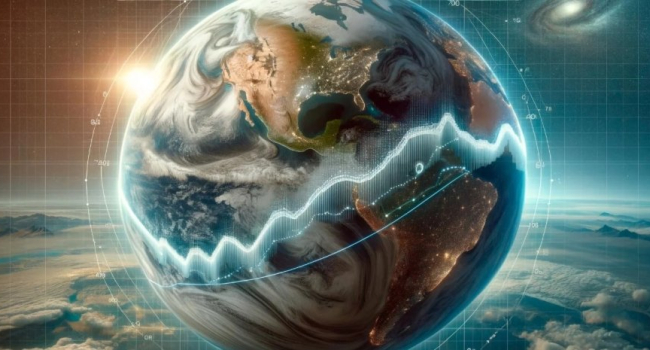
Artificial intelligence (AI) has revolutionized short-term weather forecasting, offering high accuracy and energy efficiency compared to traditional models. However, a study by researchers from the University of Chicago, New York University, and the University of California, Santa Cruz, published in the Proceedings of the National Academy of Sciences, revealed a critical flaw: neural networks struggle to predict extreme weather events, such as Category 5 hurricanes, droughts, or floods, if such events are absent from their training data.
Why Is AI “Blind” to Disasters?
Weather forecasting neural networks are trained on historical data, identifying patterns to predict future conditions. However, their capabilities are limited by what they’ve encountered in the past. If training data lacks information on rare disasters, AI cannot predict their occurrence or magnitude.
To test this, researchers trained a model without data on hurricanes above Category 2 and asked it to forecast conditions leading to a Category 5 hurricane. The results were alarming: the model consistently underestimated the event, predicting at most a Category 2 storm. It knew a storm was coming but couldn’t foresee its true strength, explained Yunqiang Sun, a co-author of the study.
Such errors could have catastrophic consequences, including loss of life and infrastructure damage, if authorities underestimate the scale of an impending disaster.
Hope for Improvement
Despite these limitations, the study showed that neural networks can recognize rare events if their training data includes similar events from other regions. For instance, a model trained on Pacific storms could predict a powerful Atlantic hurricane. This gives hope: AI can adapt if it has experience with comparable events, noted Pedram Hassanzadeh, an associate professor of geophysics at the University of Chicago.
How to Improve Forecasts?
Researchers propose combining AI with traditional physical models to enhance accuracy. One promising method is active learning, where AI helps generate synthetic scenarios of extreme events for training. This would allow neural networks to “see” rare phenomena even if they’re absent from historical data.
Another approach is integrating physical laws into AI algorithms, making models more resilient to unfamiliar scenarios and improving their ability to predict disasters.
Significance of the Study
The research underscores that AI is not a “magic” solution but a tool requiring further development.
We’ve only been using neural networks for weather forecasting for a few years, and their potential is immense, Hassanzadeh noted. Understanding their limitations allows scientists to focus on building more reliable forecasting systems that can save lives and minimize damage from natural disasters.
- Related News
- Beijing opens "Kindergarten" for robots: Machines learn from their own mistakes
- Anthropic teaches AI to control real-world machines
- DeepSeek or ChatGPT: Which is better in 2026?
- What Claude can do: A complete overview of one of the most popular AI assistants
- 50,000 subscriptions and AI for schools: How Armenia plans to use artificial intelligence in education
- How to work with neural networks properly: 5 rules that actually help
- Tech Jobs
- Most read
month
week
day
- Two comets will be visible in Autumn 2026 1275
- DeepSeek or ChatGPT: Which is better in 2026? 1060
- NASA successfully launches Nancy Grace Roman space telescope – "Hubble's successor" 667
- Anthropic teaches AI to control real-world machines 651
- New Apple CEO to refresh top management team: What we know 637
- Cosmonaut Harutyun Kiviryan passes pre-flight exam on ISS simulator 630
- Scientists have learned to transmit data by laser through atmospheric disturbances 629
- Beijing opens "Kindergarten" for robots: Machines learn from their own mistakes 608
- What will happen to the human body on Mars? 594
- Dark matter detector captures the weakest neutrinos ever detected 559
- Archive