


Tesla under investigation again: NHTSA investigates Actually Smart Summon
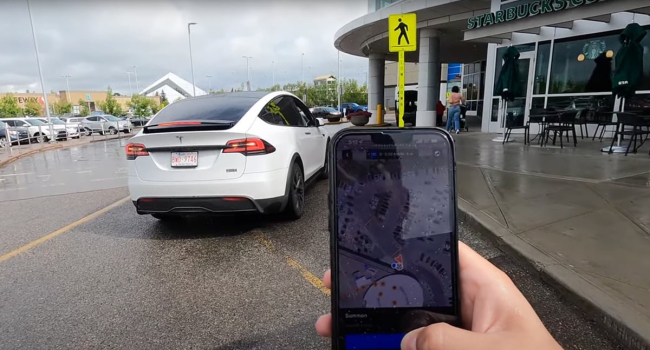
The National Highway Traffic Safety Administration (NHTSA) has launched an investigation into Tesla's Actually Smart Summon feature, which could affect up to 2.6 million vehicles. The feature allows users to move their cars remotely using an app. Recently, there have been reports of possible accidents due to its use.
The whole situation has affected the stock market, with Tesla shares falling 3% after the investigation was announced.
What is Actually Smart Summon?
Actually Smart Summon is an improved version of the original Smart Summon feature, launched in the fall of 2024. It allows Tesla owners to:
- Summon a car to you for short distances.
- Move a car out of tight spaces, such as garages.
Actually Smart Summon relies solely on the car's cameras to detect obstacles, rather than radar and other sensors.
Reasons for the Investigation
- Crash Cases: NHTSA has documented at least four incidents where Tesla vehicles with Actually Smart Summon enabled failed to detect obstacles like utility poles or parked cars, resulting in crashes.
- Media Reports and Complaints: The agency reviewed one formal complaint and three similar media reports.
- Reporting Failures: Tesla failed to report these crashes as required by the Standing General Order for Crashes Involving ADS or Level 2 ADAS, even though such incidents are required to be reported.
This is not the first time NHTSA has looked into Tesla's autonomous features. FSD (fully autonomous driving) has previously been investigated for crashes in low-visibility conditions and insufficient updates.
At the same time, Tesla CEO Elon Musk continues to push autonomous technology, including the development of the Cybercab robotaxis, which is not expected to launch until 2026.
Musk's support for President-elect Donald Trump could be a boon for Tesla, which is expected to ease national regulations for autonomous vehicles, which could help the company avoid tougher regulatory hurdles.
- Related News
- Tesla unveils AI5 chip with 40-fold performance boost
- Tesla Optimus masters household chores: New capabilities of humanoid robots demonstrated
- Forbes Billionaires 2025: Tech Leaders Dominate World's Richest People
- Tesla robotaxi service to be backed up by human teleoperators
- Tesla's stock price rises up by 22%
- 'Hey Elon, can you return my design?' Musk was accused of plagiarism
- Tech Jobs
- Most read
month
week
day
- Earth’s microbes may survive on the Moon. Even a bootprint is enough to shield them 644
- Firebird AI Joins UATE as a Strategic Member 644
- Astronomers have found the fastest star in the Milky Way—it races around a black hole at 8% of the speed of light 627
- Quantum entanglement has been achieved directly from sunlight for the first time 614
- The anniversary iPhone 20 will be as thin as the Air: what the insider revealed 572
- How NASA's primary training centre is changing in the era of commercial space stations 568
- From Excel to AI: A startup by specialists who relocated from Iran to Armenia helps businesses make sense of their data 535
- Robot knocks out teeth of five year old girl: Incident at Chinese museum leads to lengthy compensation dispute 497
- Why Bill Gates is no longer an AI optimist: Three major threats of AI 478
- How to make your new smartphone more secure: expert tips 457
- Archive